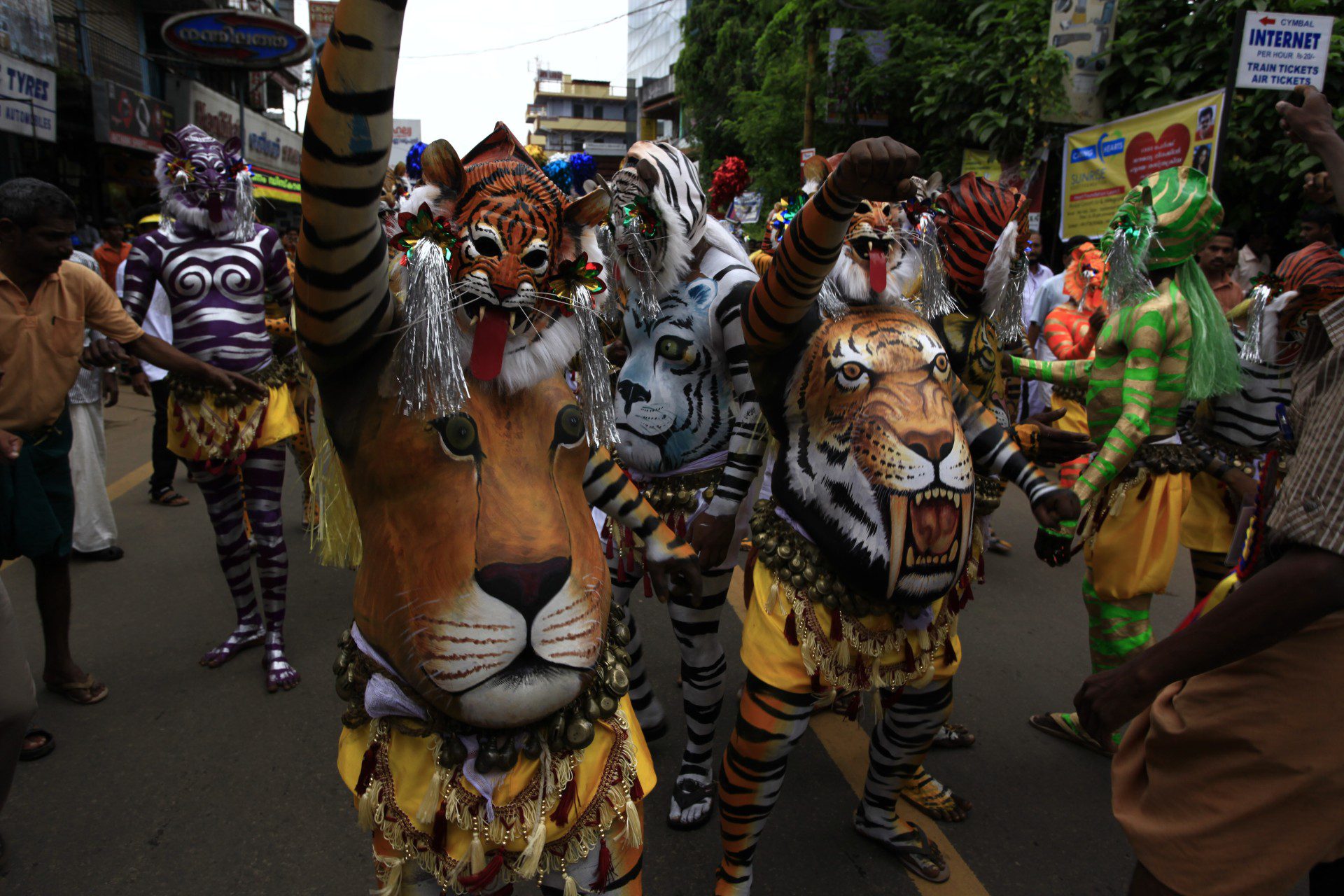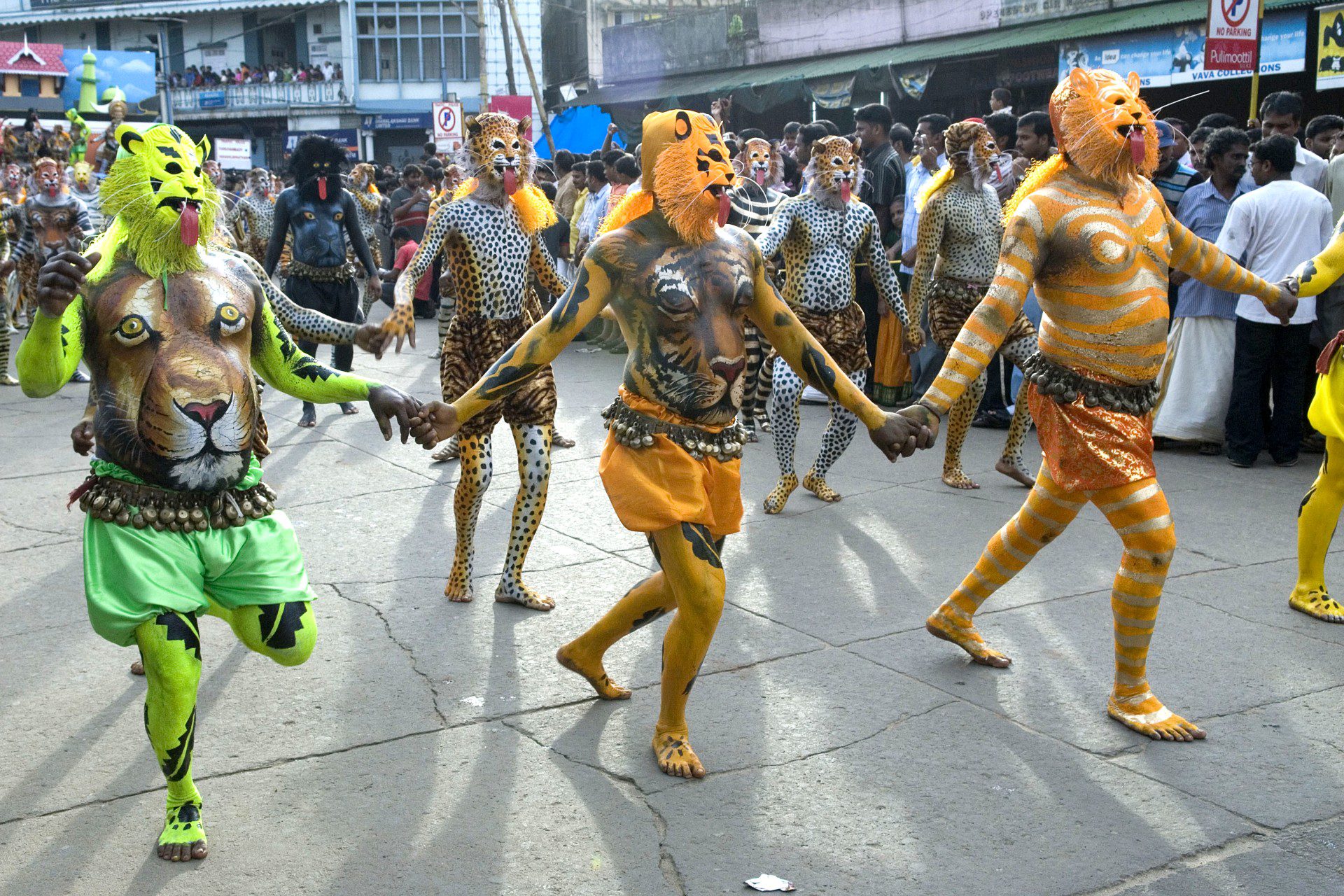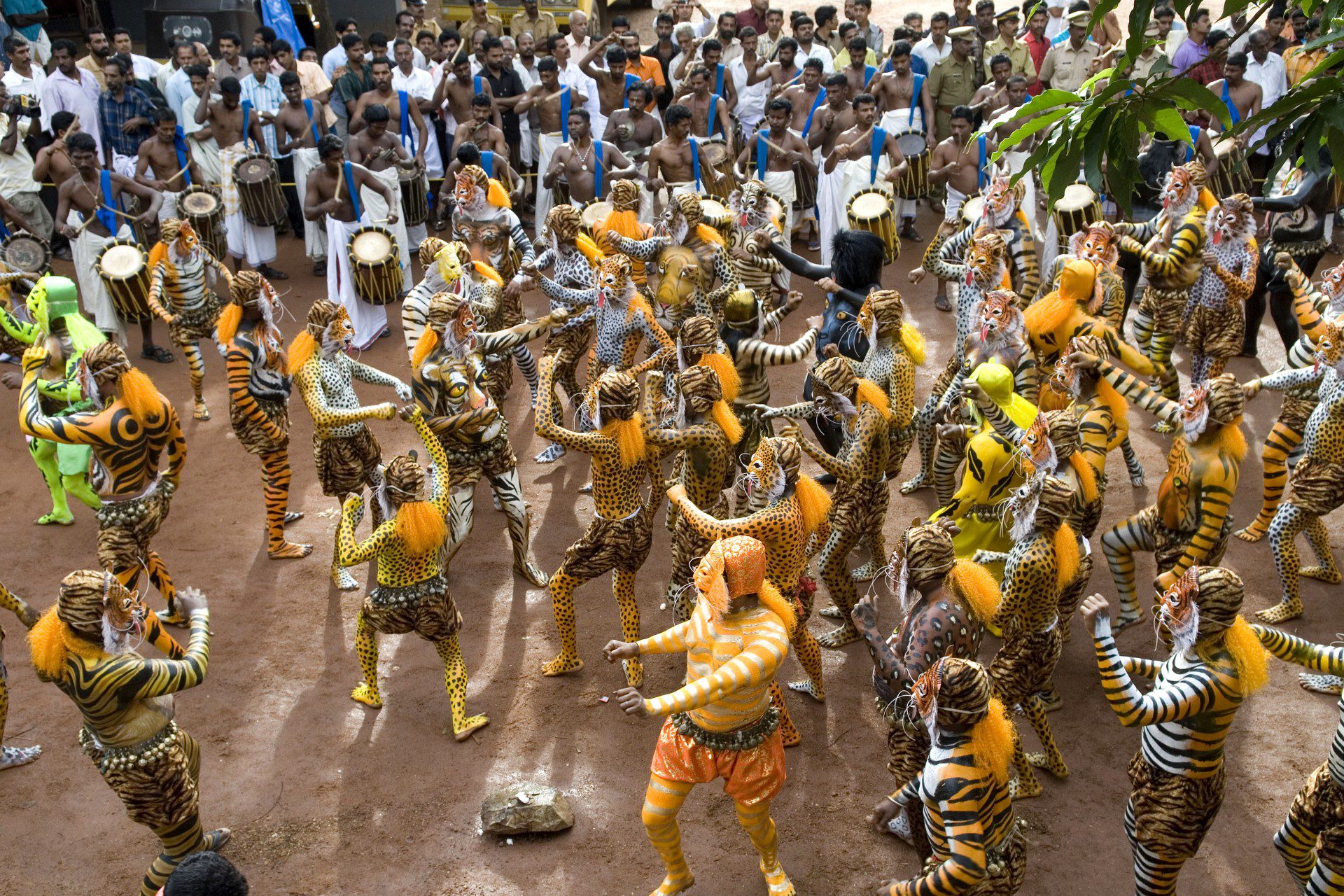

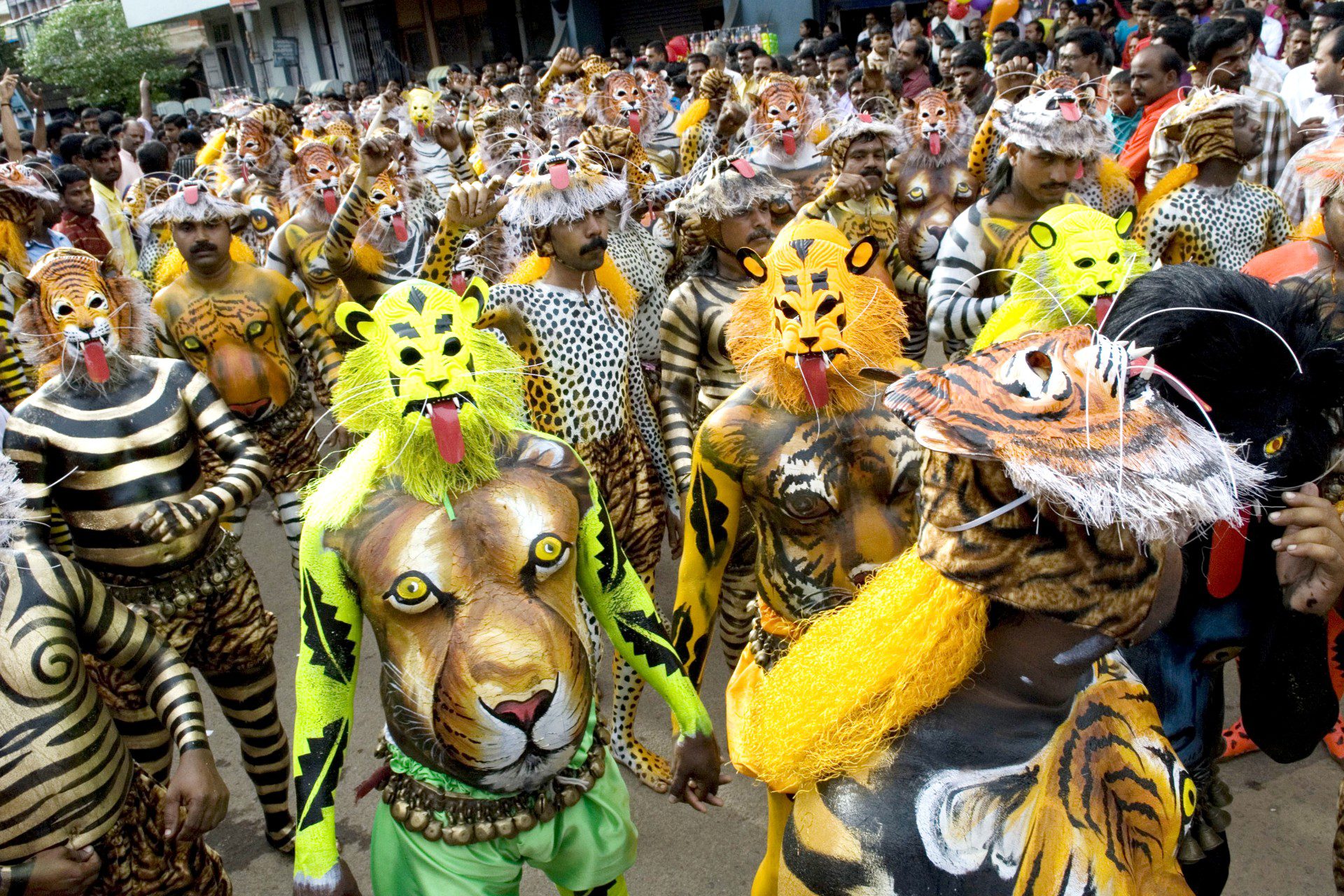
Pulikali, meaning “tiger play,” captivates Thrissur streets during Onam with performers painted as tigers in vibrant yellows and black stripes, mimicking fierce hunts and prowls. Introduced over 200 years ago by Maharaja Rama Varma Sakthan Thampuran of Cochin—the same visionary behind Thrissur Pooram—this folk art enlivens the harvest festival’s fourth day. Thrissur hosts the most authentic version, blending athleticism, rhythm, and communal joy at Swaraj Round.
Historical Roots
Sakthan Thampuran created Pulikali to infuse Onam with martial spirit, training soldiers in tiger-like agility while fostering unity across communities, including Muslim performers from Thrissur’s Pattani tradition. Evolving from street processions tied to ancient rituals like the Pancha-taking ceremony, it gained structure under royal patronage, becoming a codified art form by the 18th century. This syncretic heritage underscores Kerala’s inclusive cultural tapestry.
Performance Highlights
- Body Painting: Artists apply intricate oil-based designs using rice paste and natural colors, a grueling two-hour process resistant to sweat during vigorous dances.
- Tiger Hunt Theme: Dancers enact predator-prey chases with acrobatic leaps, growls, and synchronized steps to chenda drums and elathalam cymbals.
- Processions: Troupes from deshams like Viyyur and Ayyanthole assemble, offering prayers at Naduvilal Ganapati Temple before parading through crowds.
- Musical Accompaniment: Pandi melam beats drive the energy, drawing thousands to witness the raw power.
Cultural Role and Tips
Pulikali symbolizes strength, harvest bounty, and harmony, now including women performers in recent decades for broader participation. For your website, schedule it around Onam 2026 (likely early September); advise visitors to arrive by dawn for painting sessions and book Thrissur stays early amid festivities. Embrace the sensory thrill—roars, sweat-glistened bodies, and festive fervor—for an authentic Kerala immersion