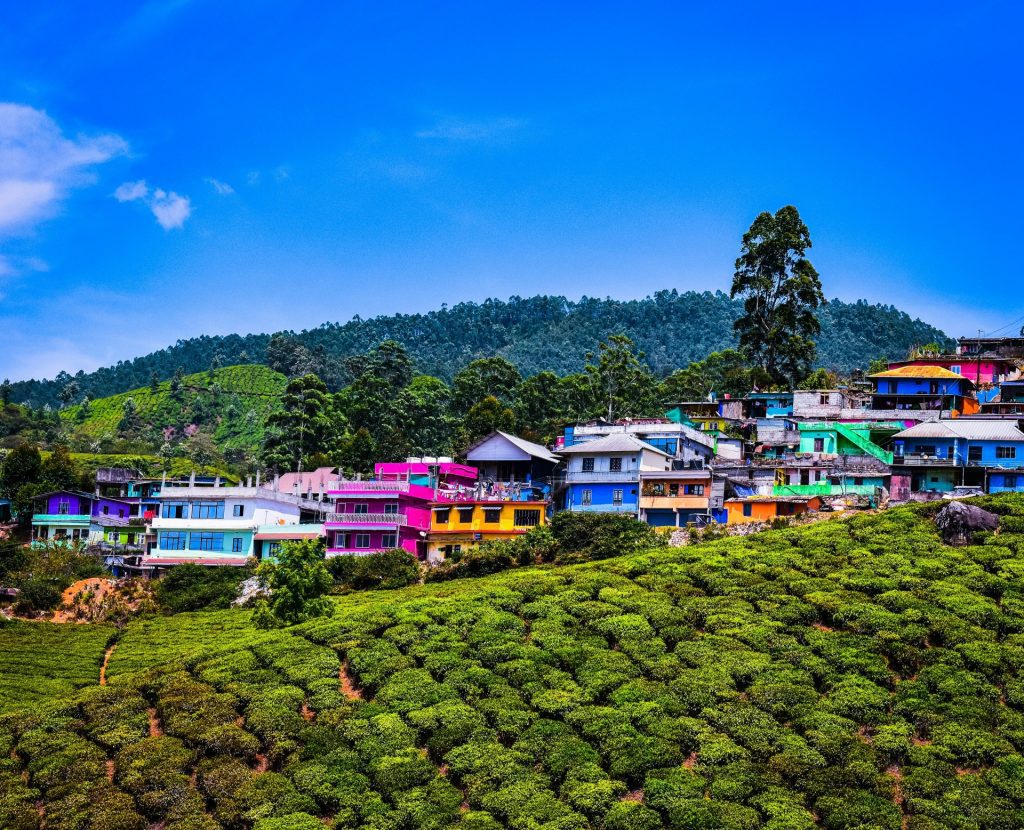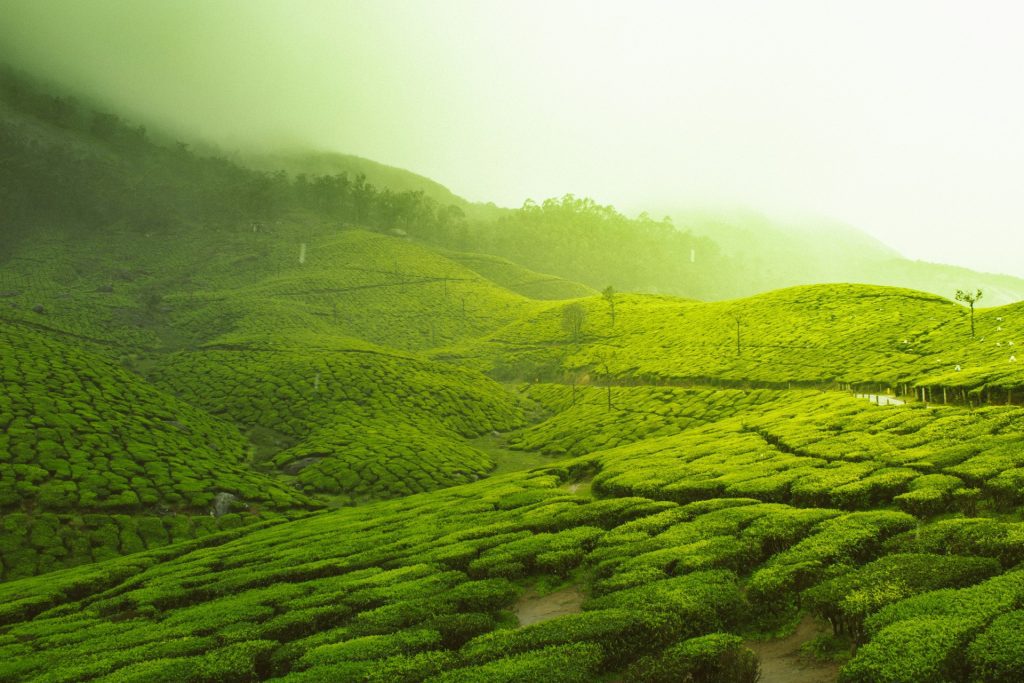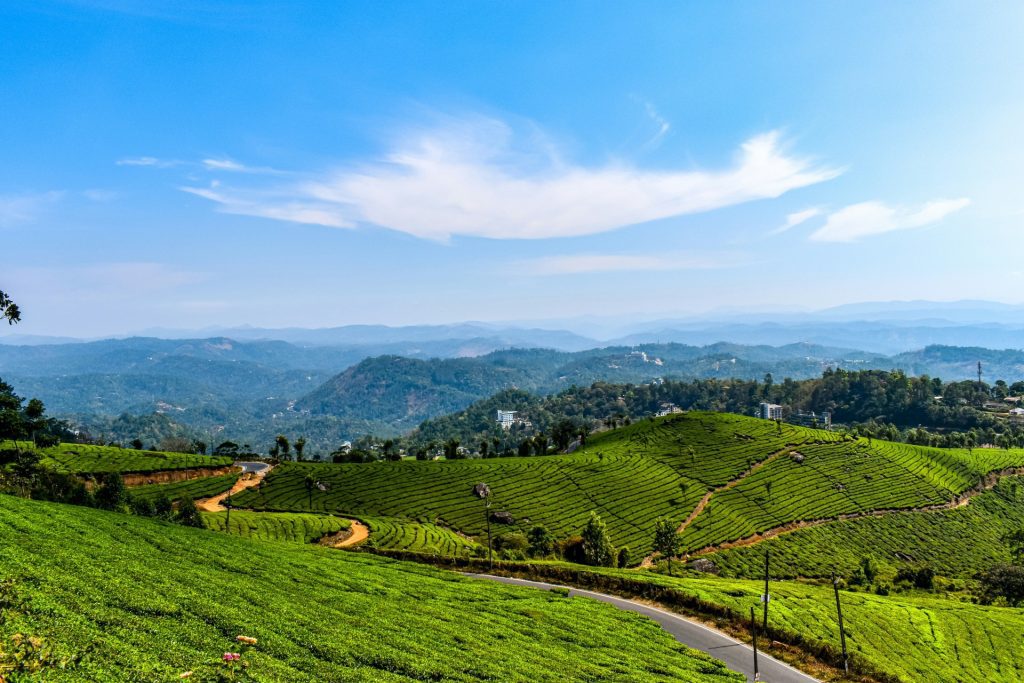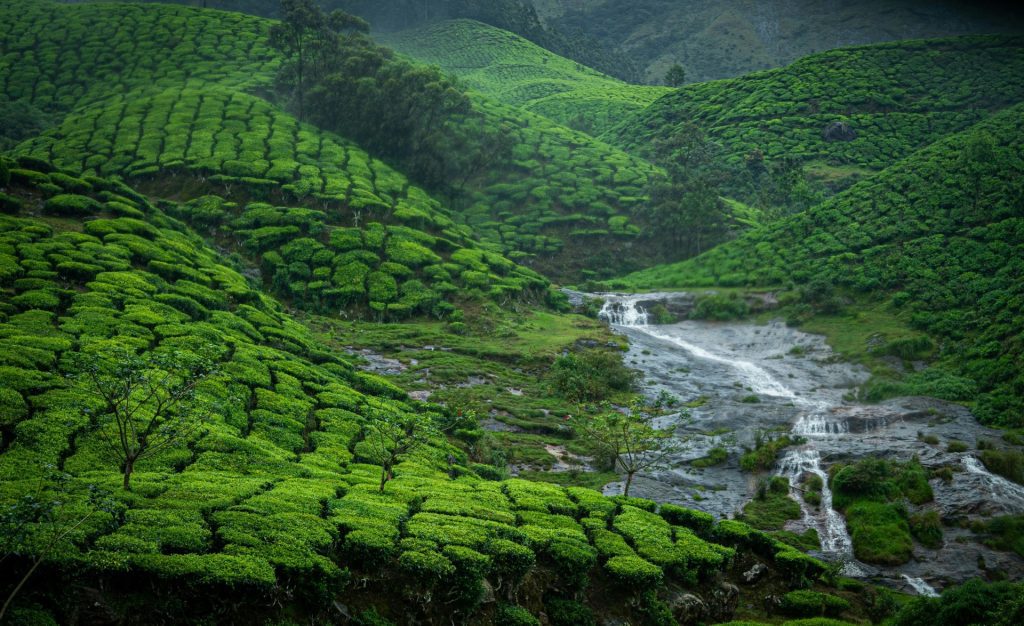

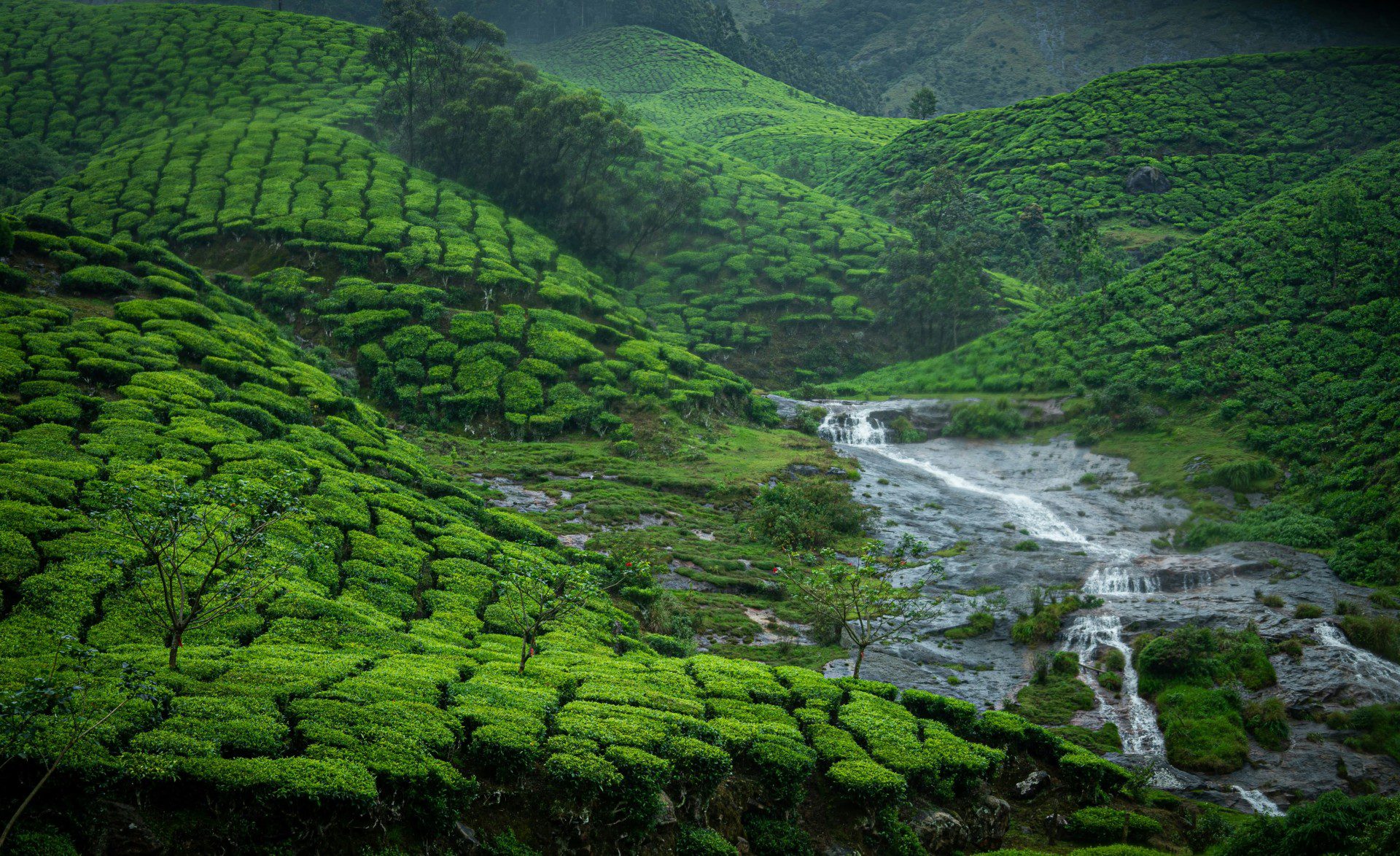
Munnar is a renowned hill station in the Idukki district of Kerala, India, situated at about 1,600 meters above sea level in the Western Ghats, famous for its sprawling tea plantations and scenic beauty. The name derives from “Munnu Aaru,” meaning “three rivers,” referring to the confluence of Muthirapuzha, Nallathanni, and Kundala rivers.
History
Originally inhabited by Muthuvan tribes, Munnar gained prominence in the late 19th century when British planter John Daniel Munro leased Kanan Devan hills from the Poonjar royal family in 1877 for tea cultivation. Plantations expanded under companies like Finlay Muir, with infrastructure like ropeways and railways added by the early 1900s, though disasters like the 1924 monsoon posed challenges.
Key Attractions
- Eravikulam National Park, home to endangered Nilgiri Tahr and Anamudi peak, Kerala’s highest.
- Mattupetty Dam and Echo Point for boating and views.
- Tea Museum showcasing plantation history.
- Top Station for panoramic vistas and Pallivasal waterfalls.
Munnar offers cool climate, misty valleys, and trekking opportunities, making it a top South Indian destination once used as a British summer retreat.