
Theyyam: Kerala’s Divine Ritual Dance
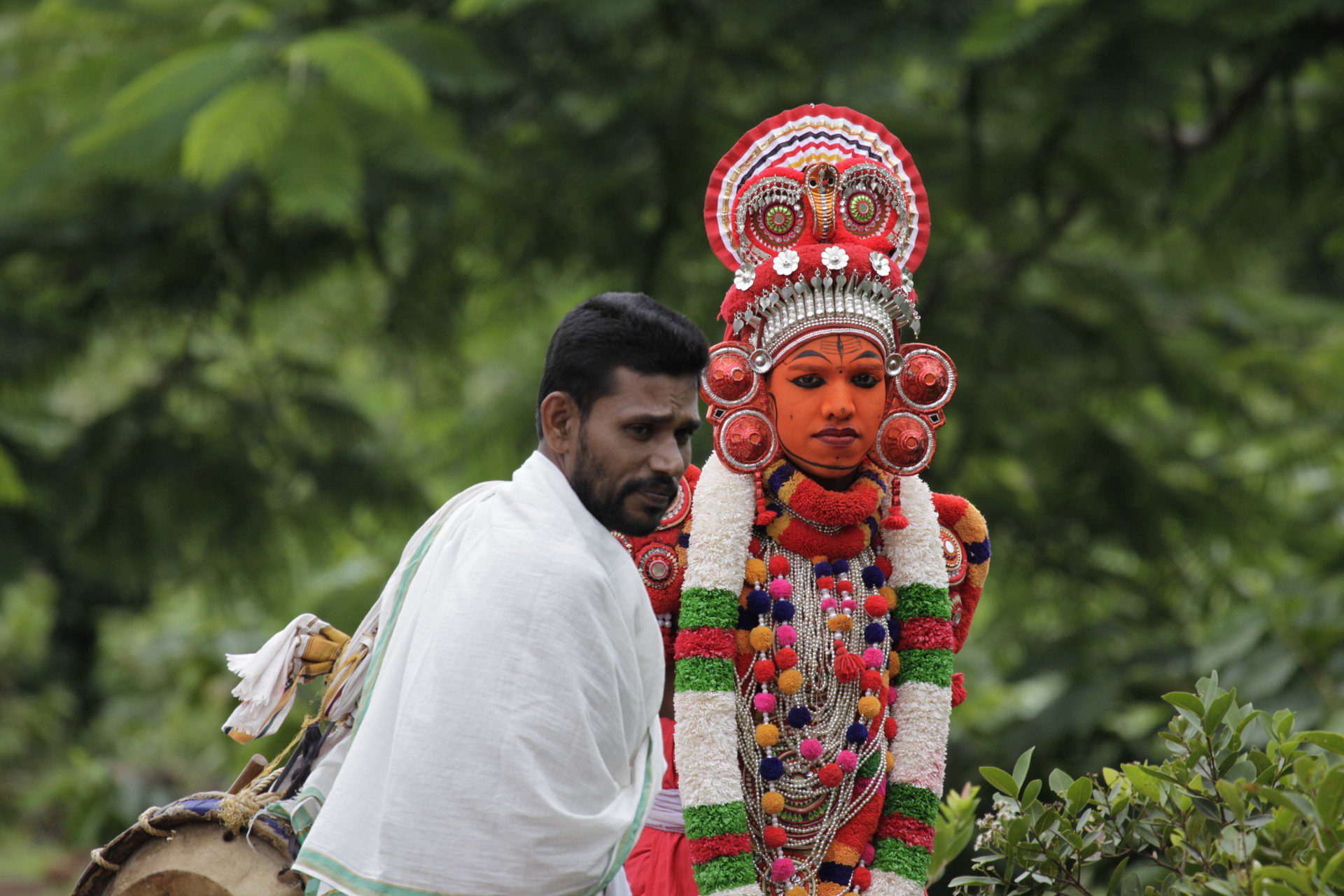
Theyyam transforms performers into living deities through trance-inducing rituals, elaborate costumes, and rhythmic dances in North Kerala’s sacred groves and shrines. This ancient art form, over 1,500 years old, blends worship of Hindu gods like Kali with pre-Hindu tribal animism, primarily in Kannur, Kasaragod, and Wayanad districts. Men from communities like Malayan and Vannan embody gods via 8-10 hour preparations, becoming divine until the sacred headgear is removed.
Origins and Beliefs
Theyyam, also called Kaliyattam, predates Hinduism, evolving as a medium where lower-caste performers gain temporary god-like status to bless, heal, and resolve disputes for devotees. Legends tie it to myths recited in ritual songs, with the deity entering the dancer after consuming toddy to suppress ego. Over 400 varieties exist, each with unique stories, from fierce warriors to benevolent mothers.
Performance Stages
- Vellattam/Thottam: Initial raw invocation with minimal red headdress, simple chants, and dances around the shrine to folk drums like chenda and elathalam.
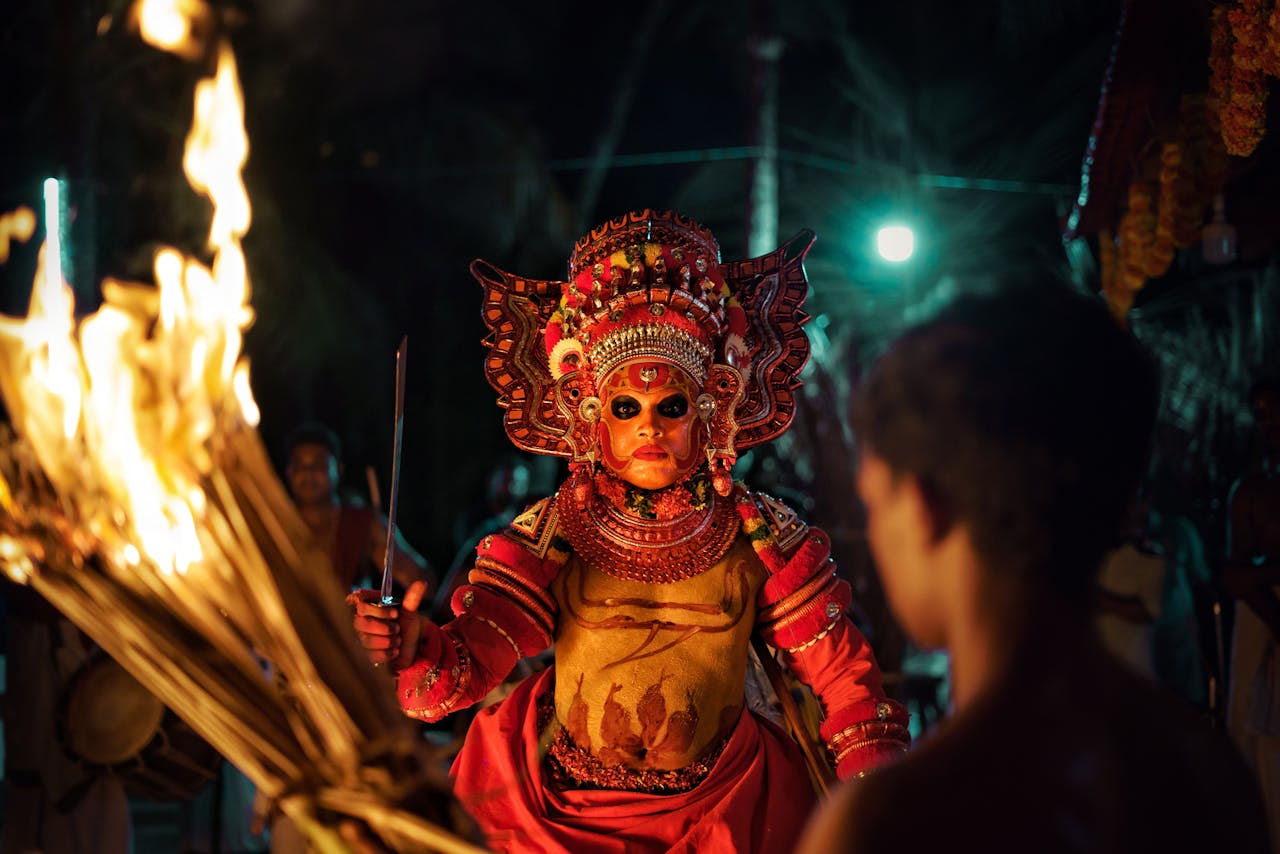
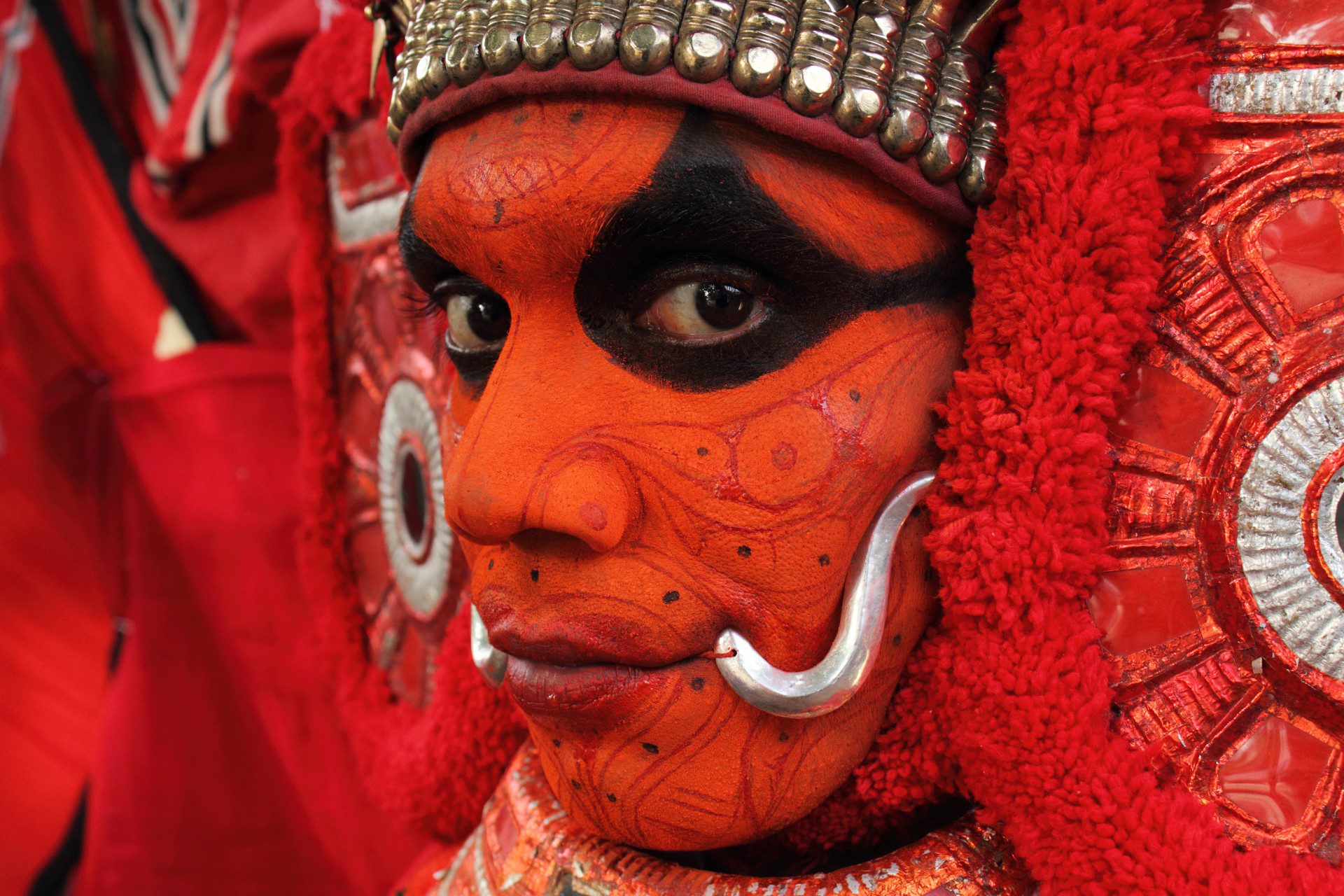
- Full Transformation: Elaborate makeup (orange hues, facial sculptures), towering headgear (mudi), skirts of palm leaves, and brass ornaments; dancer enters trance for kalaasams (footwork steps).
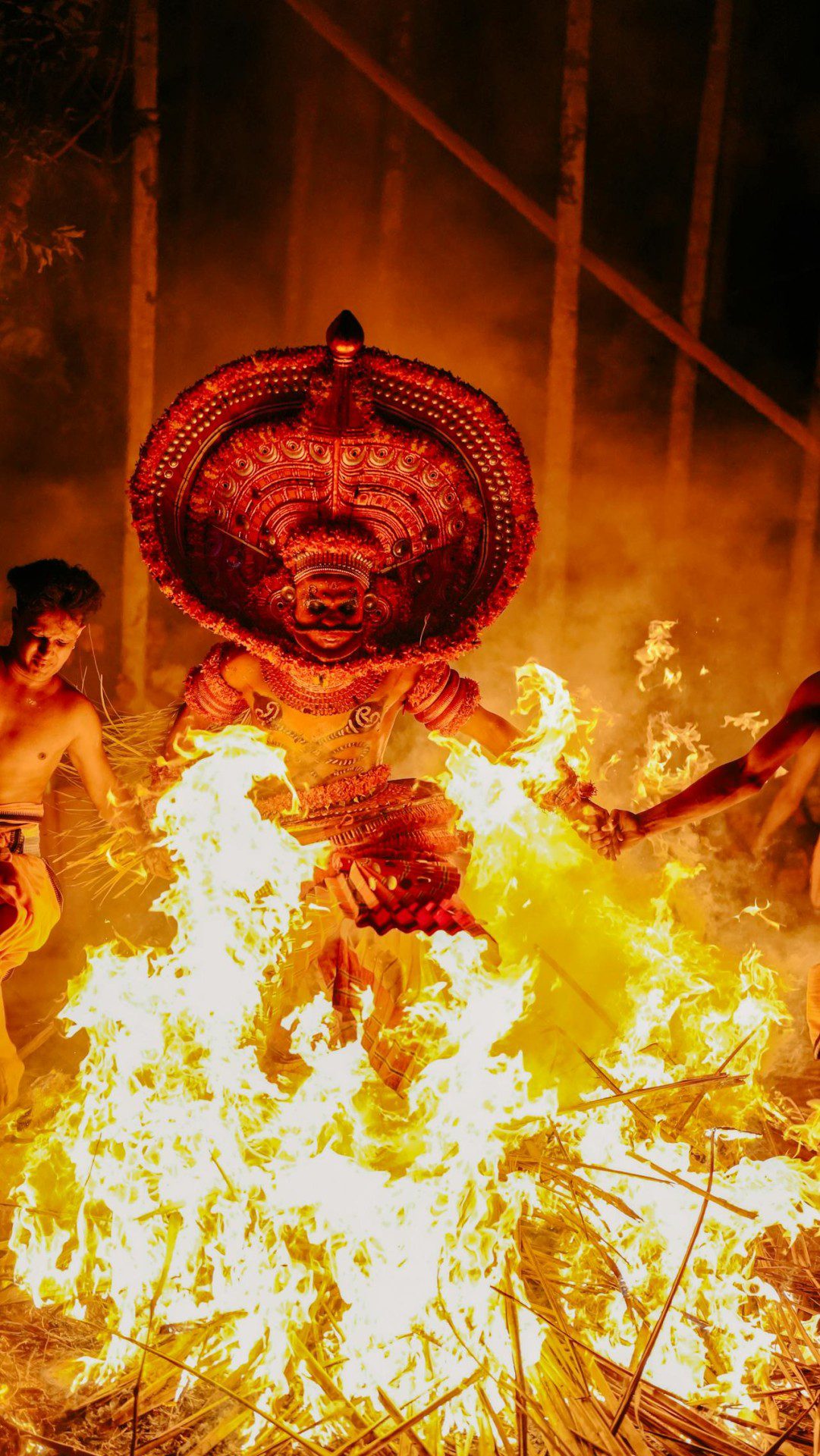
- Interactions: Blesses crowds with turmeric powder and rice, walks on coals, or converses as the god before midnight dispersal.
Cultural Essence
Season runs December to May at kavus (sacred groves), fostering social equality as devotees from all castes seek favors. Women rarely perform traditionally, but the spectacle’s trance, music, and visuals draw global tourists. For your website, highlight ethical viewing—respect distances, avoid flash photography—to preserve its sanctity amid Kerala’s festival circuit alongside Thrissur Pooram and Pulikali